Use Case #24: Meta-Prompting
Meta-prompting: using Claude to write prompts for other AI systems.
William Welsh
Author
Use Case #24: Meta-Prompting
Different AI tools speak different languages. DALL-E wants certain keywords. Midjourney has its own syntax. GPT-4 responds to specific structures.
I don't want to remember all that. Claude does.
The Meta-Prompt Pattern
Me: "I need a hero image for a fintech landing page. Minimalist, blue tones, abstract."
Claude: "Here are optimized prompts for each platform:"
For DALL-E 3 - Professional prompt with specific style keywords, aspect ratio, and negative prompts.
For Midjourney - Same concept, different syntax. Parameters like --ar and --stylize. Keywords Midjourney responds to.
For Stable Diffusion - Yet another format. Weighted tokens, checkpoint recommendations.
Why This Matters
Each platform has quirks. Midjourney loves "cinematic lighting." DALL-E prefers "professional photography style." Knowing these differences gets better results.
Claude knows them. I don't have to.
Beyond Images
Same pattern works for other AI tools. Need a ChatGPT prompt that produces consistent JSON? Claude writes it with the specific phrasing that reduces hallucination. Need a Whisper transcription prompt? Claude knows which settings reduce filler word artifacts.
The Multiplier Effect
One request to Claude → optimized prompts for 5 different tools → better results from all of them.
Meta-prompting is prompting about prompting. And it works.
I use this pattern almost daily across multiple AI tools.
William Welsh
Building AI-powered systems and sharing what I learn along the way. Founder at Tech Integration Labs.
Related Articles
View all →Use Case #19: Gemini to Claude Handoff
Gemini generates beautiful UI mockups. Claude integrates them into real apps. Together they cover more ground than either alone.

Use Case #1: Autonomous Bug Fixing from Slack
One prompt. Zero babysitting. Claude read bug reports from Slack, traced the issues through my codebase, fixed them, deployed to production, and verified the fixes in a browser.
Use Case #2: Client Onboarding from URL
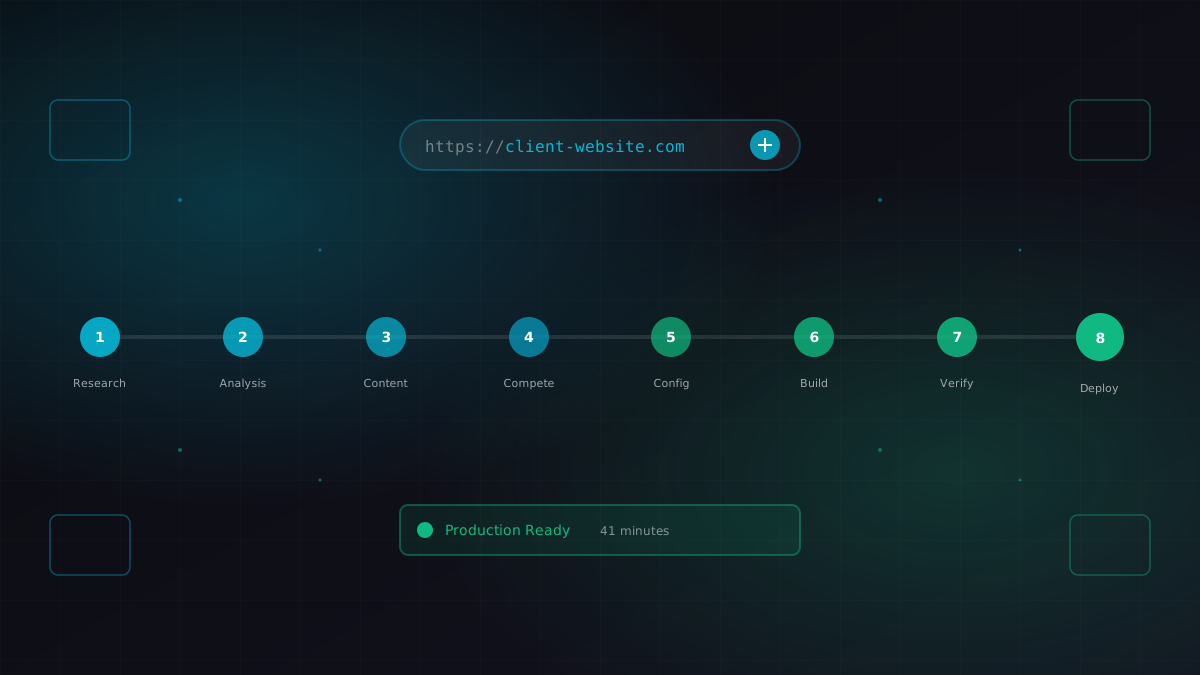
I gave Claude a business URL. It researched the company, scraped their content catalog, identified competitors, extracted brand colors, and generated a fully configured ContentEngine instance.