Use Case #18: Competitive Research to Build
Researching how competitors implement a feature, then building a better version.
William Welsh
Author
Use Case #18: Competitive Research to Build
"Can we do what Competitor X does? But better?"
Every client asks this eventually.
The Request
The client wanted a content calendar feature. They'd seen it in a competitor's product and loved it. But they wanted it tailored to their workflow.
Phase 1: Research
Claude researched the competitor:
Public Information - Marketing pages, demo videos, help docs. Understood the feature surface.
Trial Account - Created a trial (they had a free tier). Explored the actual implementation. Found 3 UX issues they probably knew about but hadn't fixed.
Review Analysis - Read G2 and Capterra reviews specifically about the calendar feature. Users complained about: no bulk operations, poor mobile experience, confusing color coding.
Phase 2: Analysis
Synthesized findings into opportunities:
What they do well - Drag-and-drop scheduling, visual timeline, status indicators.
What they do poorly - No bulk editing, mobile is afterthought, colors aren't configurable.
What they're missing - AI suggestions, conflict detection, team workload balancing.
Phase 3: Design
Designed our version with their strengths (kept the good patterns), their weaknesses fixed (bulk ops, mobile-first, custom colors), and novel additions (AI scheduling, conflict alerts).
Phase 4: Build
Implemented the feature. Total time from "can we do what X does" to working feature: 3 days.
The Client's Reaction
"This is better than theirs."
Yes. That was the point.
The Pattern
Competitive research isn't copying. It's learning from their mistakes and building something better. Claude accelerates both the research and the synthesis.
Built for a content marketing client, December 2025.
William Welsh
Building AI-powered systems and sharing what I learn along the way. Founder at Tech Integration Labs.
Related Articles
View all →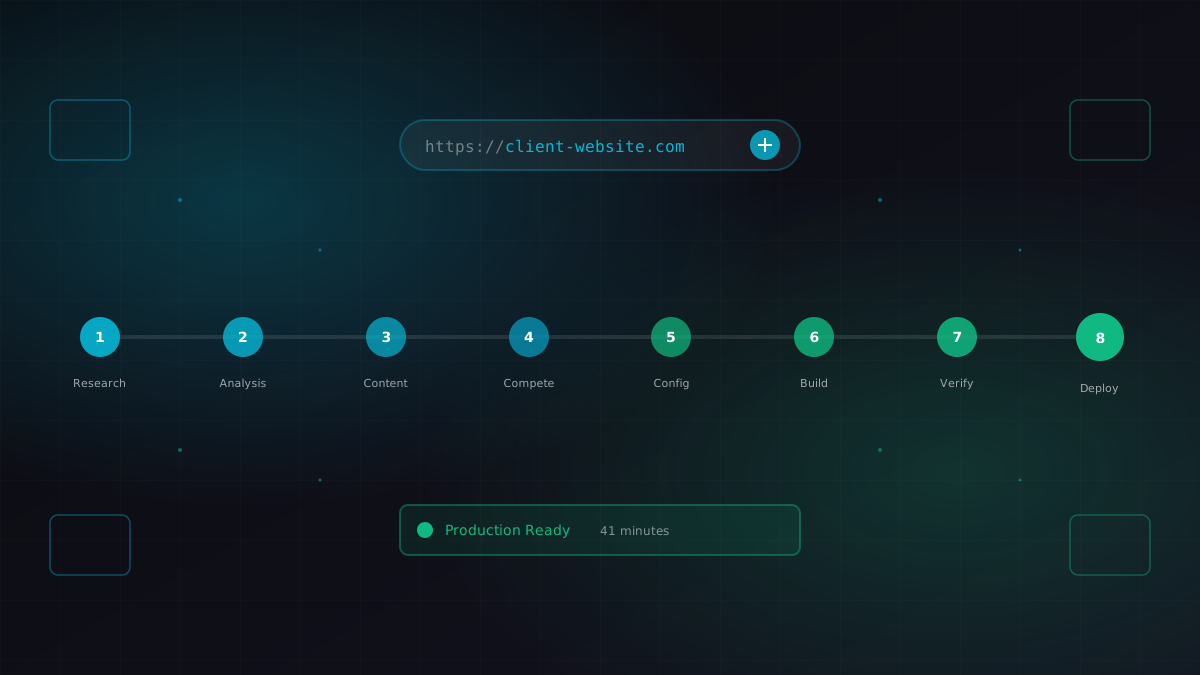
Use Case #2: Client Onboarding from URL
I gave Claude a business URL. It researched the company, scraped their content catalog, identified competitors, extracted brand colors, and generated a fully configured ContentEngine instance.
Use Case #31: Full-Stack Feature
New feature request: appointment reminders. Database tables, API endpoints, background jobs, email templates, UI components - all built in one 3-hour session.
Use Case #1: Autonomous Bug Fixing from Slack
One prompt. Zero babysitting. Claude read bug reports from Slack, traced the issues through my codebase, fixed them, deployed to production, and verified the fixes in a browser.