Use Case #30: Multi-Repo Sync
Synchronizing shared code, configs, and dependencies across multiple repositories.
William Welsh
Author
Use Case #30: Multi-Repo Sync
We have a shared component library. 6 apps use it. When the library updates, 6 repos need updates.
This used to be a half-day task.
The Sync Process
Step 1: Update Detection - Claude checks the shared library for new version, changelog, and breaking changes.
Step 2: Impact Analysis - For each consuming repo: what components are used? Which are affected by changes?
Step 3: Update Propagation - Clone each repo. Update dependency. Run build. Identify breaks.
Step 4: Fix Breaking Changes - Each repo might break differently. Claude adapts to each codebase's patterns.
Step 5: Verification - Build passes. Tests pass. Visual spot-check on dev server.
Step 6: Commit and PR - Create PRs with changelog and migration notes.
Example Update
Library update: Button component API changed. Now requires 'variant' prop.
Repo 1 - 47 Button usages. All used default styling. Added variant="default" to all.
Repo 2 - 23 Button usages. Already had variant prop (coincidence). No changes needed.
Repo 3 - 156 Button usages. Mixed patterns. Claude analyzed each usage context to determine correct variant.
Time Comparison
| Approach | Time per repo | Total |
|---|---|---|
| Manual | 90 min | 9 hours |
| Automated | 15 min | 90 min |
The Real Value
Not just time saved. Consistency. Every repo gets the same update, applied the same way, with the same verification.
Multi-repo sync pattern developed December 2025.
William Welsh
Building AI-powered systems and sharing what I learn along the way. Founder at Tech Integration Labs.
Related Articles
View all →
Use Case #1: Autonomous Bug Fixing from Slack
One prompt. Zero babysitting. Claude read bug reports from Slack, traced the issues through my codebase, fixed them, deployed to production, and verified the fixes in a browser.
Use Case #2: Client Onboarding from URL
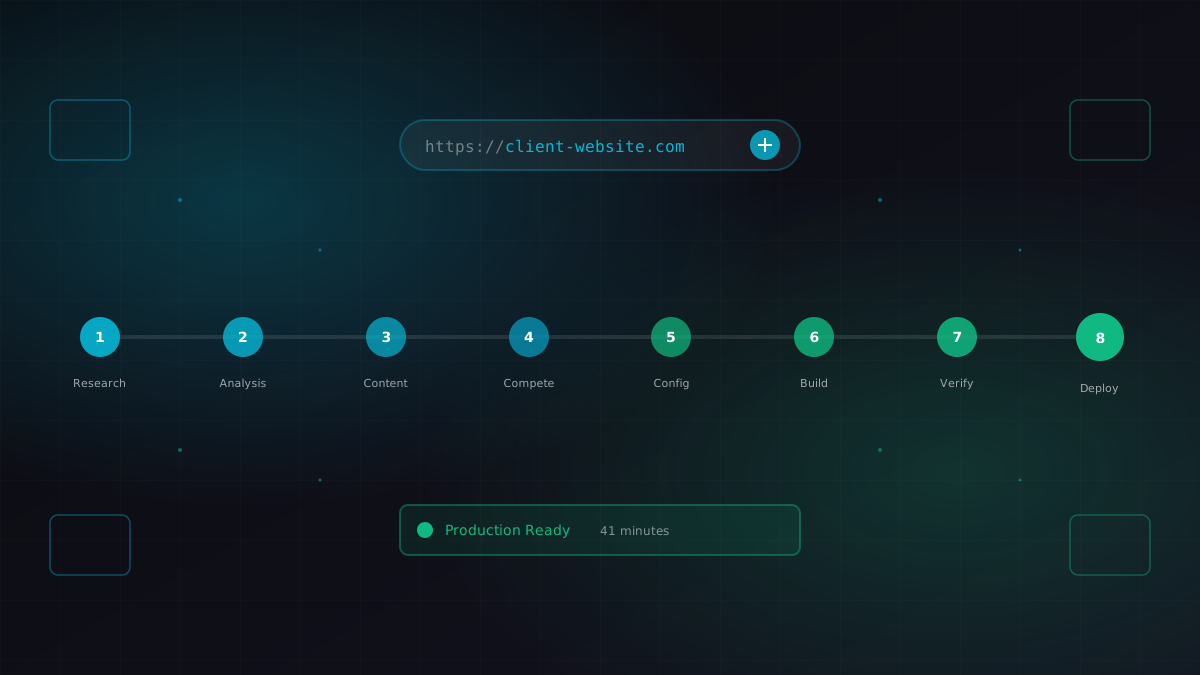
I gave Claude a business URL. It researched the company, scraped their content catalog, identified competitors, extracted brand colors, and generated a fully configured ContentEngine instance.
Use Case #3: Meeting Transcript to Code
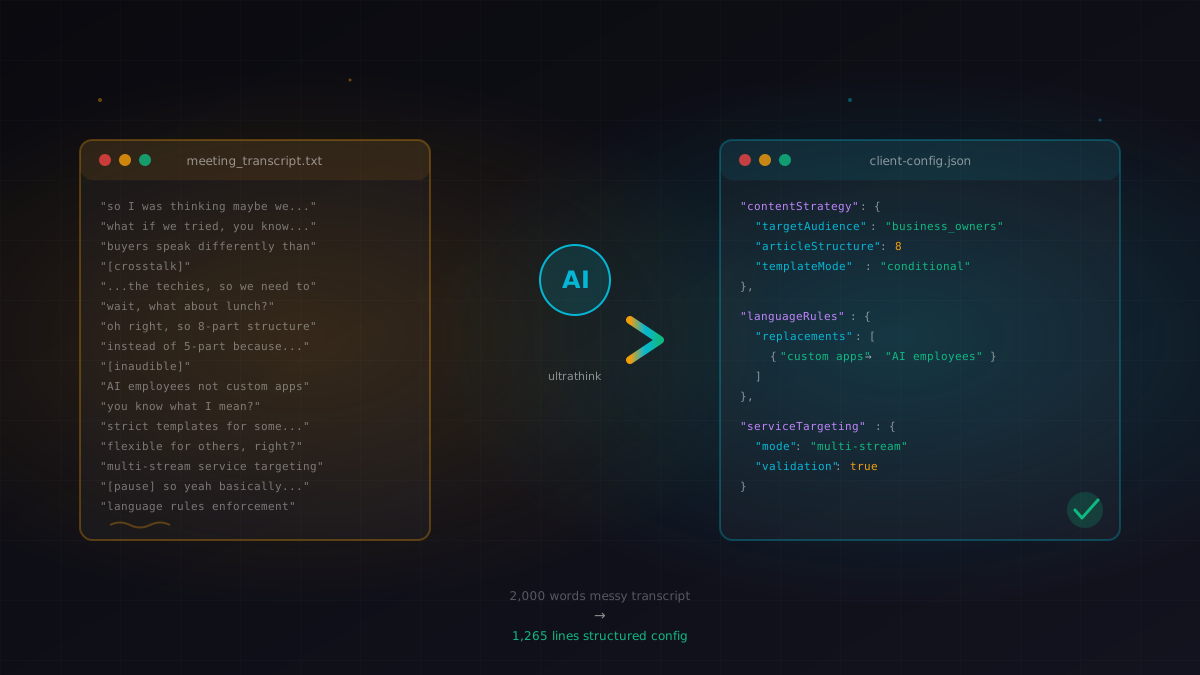
I pasted a 10-minute meeting transcript. Claude extracted the strategy, identified the technical requirements, and modified a 1,265-line config file with conditional content logic.