Use Case #25: NotebookLM Preparation
Optimizing documents for Google NotebookLM ingestion and podcast generation.
William Welsh
Author
Use Case #25: NotebookLM Preparation
Google's NotebookLM turns documents into conversational podcasts. It's genuinely impressive.
But the output quality depends heavily on input quality.
The Problem
Raw documents often have structure that confuses NotebookLM: tables that become word salad, code blocks that get read literally, acronyms that aren't expanded, context that's assumed but never stated.
The Solution
Before feeding documents to NotebookLM, Claude preprocesses them:
Tables → Prose - Convert data tables to written descriptions. "Revenue grew from $1M to $1.5M" instead of a table row.
Code → Concepts - Replace code blocks with plain English explanations of what the code does.
Acronym Expansion - First use of any acronym gets expanded. "Row Level Security (RLS)" not just "RLS."
Context Addition - Add brief introductions that frame the document. NotebookLM's hosts need to know what they're discussing.
Section Balance - Ensure roughly equal depth across sections. NotebookLM rushes through thin sections.
The Results
Podcasts from preprocessed documents are more coherent, cover topics more evenly, don't have awkward pauses where hosts struggle with data, and sound more like genuine conversations.
Example
Original: Dense technical specification with tables and code.
Preprocessed: Narrative description of the same content, optimized for audio.
NotebookLM output: 12-minute podcast that actually explains the concept clearly.
I prepare client documentation this way before generating audio summaries.
William Welsh
Building AI-powered systems and sharing what I learn along the way. Founder at Tech Integration Labs.
Related Articles
View all →
Use Case #1: Autonomous Bug Fixing from Slack
One prompt. Zero babysitting. Claude read bug reports from Slack, traced the issues through my codebase, fixed them, deployed to production, and verified the fixes in a browser.
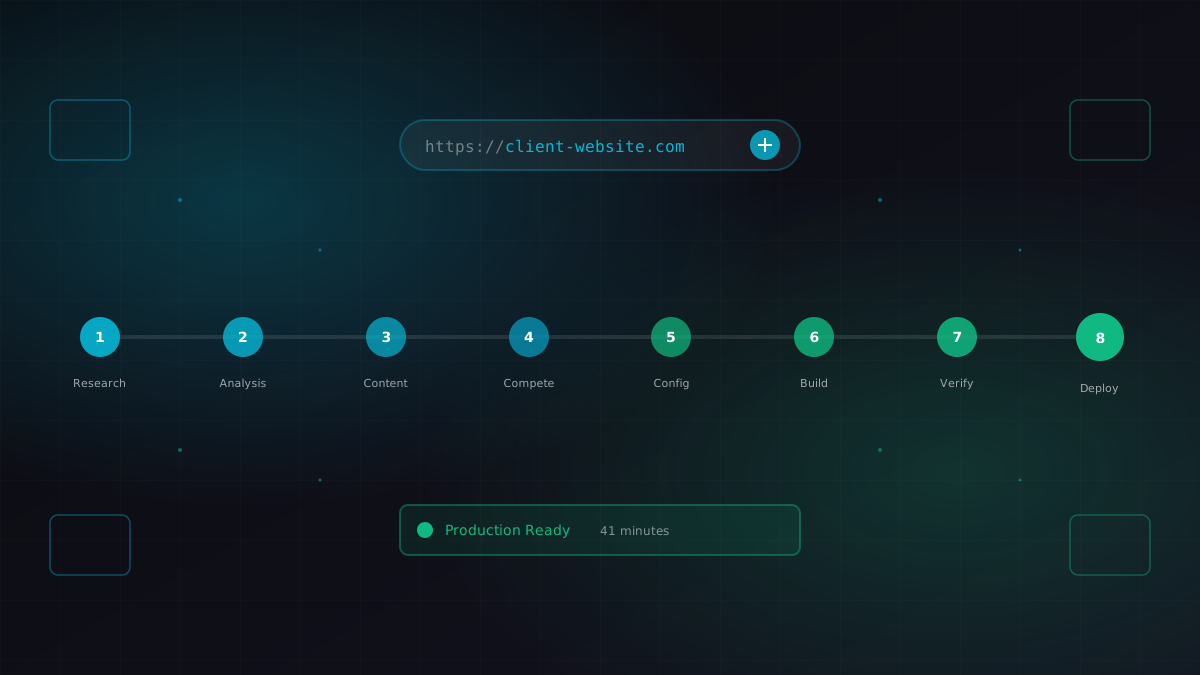
Use Case #2: Client Onboarding from URL
I gave Claude a business URL. It researched the company, scraped their content catalog, identified competitors, extracted brand colors, and generated a fully configured ContentEngine instance.
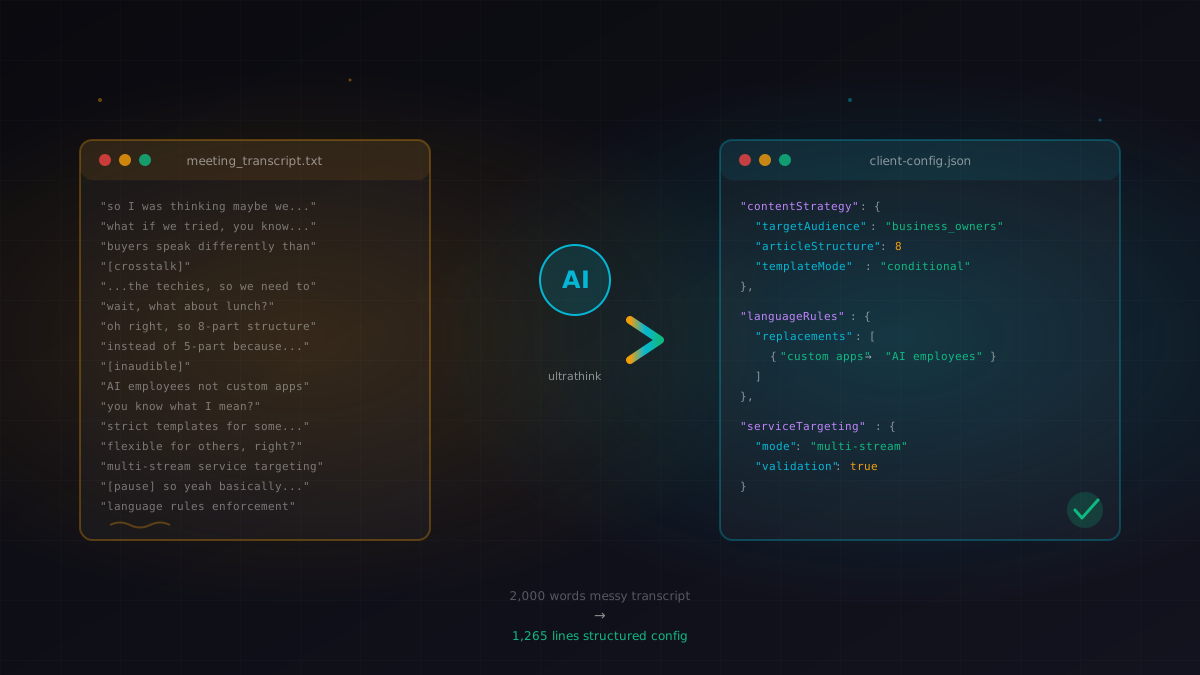
Use Case #3: Meeting Transcript to Code
I pasted a 10-minute meeting transcript. Claude extracted the strategy, identified the technical requirements, and modified a 1,265-line config file with conditional content logic.